Dinner and Science Cafe with Dr. Ah-Hyung “Alissa” Park
Please join the Richland Section for a presentation by Dr. Alissa Park, “Sustainable conversion of marine biomass for tandem H2 production with carbon capture and metal recovery”.
This event is free to all ACS members. Non-ACS members are asked to pay $15; payable in advance by Zelle to acsrichlandsection@gmail.com or by check (to American Chemical Society) or cash on arrival.
Dinner will be served. Space is limited. Please RSVP at the link https://forms.gle/oREGjk3awvtodBNh8by or by scanning the code by Sep 28, 2026. For more information, please contact shirmir.branch@gmail.com or acsrichlandsection@gmail.com.
Event flyer: Park Science Cafe flyer
When: 0ct 01, 2026 at 5:30 pm
Where: Budd’s Broiler 450 Columbia Point Dr, Richland, WA 99352
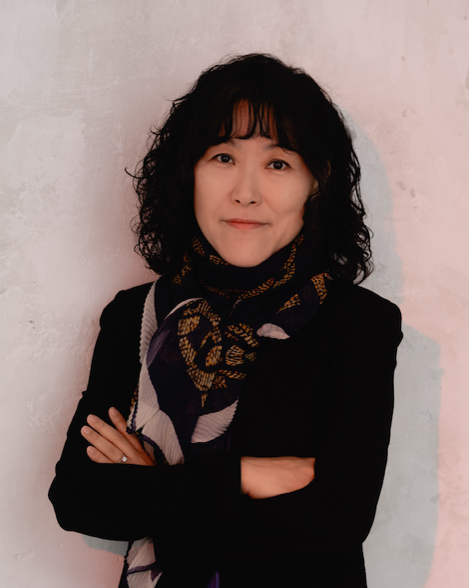
A.-H. “Alissa” Park is the Ronald and Valerie Sugar Dean of UCLA Samueli School of Engineering and a Professor of Chemical and Biomolecular Engineering at the University of California, Los Angeles. Before joining UCLA in 2023, she was the Lenfest Earth Institute Professor of Climate Change at Columbia University, where she also served as the Director of the Lenfest Center for Sustainable Energy. Her research focuses on sustainable energy and materials conversion pathways with an emphasis on integrated Carbon Capture, Utilization and Storage (CCUS) technologies. Park received many professional awards and honors, including the ACS Francis P. Garvan-John M. Olin Medal, AIChE Program Committee’s Leadership Award for Innovations in Green Process Engineering, ACS ENFL Distinguished Researcher Award, IUPAC Distinguished Women in Chemistry or Chemical Engineering Award, the AIChE PTF Shell Thomas Baron Award, AIChE PTF PSRI Lectureship Award, U.S. C3E Research Award, and NSF CAREER Award. She also led key global and national discussions on CCUS, including the Mission Innovation Workshop in 2017. Park is a Fellow of AIChE, ACS, RSC, and AAAS.
The alkaline thermal treatment (ATT) of waste biomass derived from coastal marine sources was studied to convert biomass into carbonate materials in a carbon-negative manner, while producing H2 as a valuable product. ATT is one of the unique reactions that can be used to directly convert wet and salty biomass, such as seaweed, in a single-step reaction under mild reaction conditions. Various reaction conditions were profiled, including temperature, steam load, hydroxide utilized, and biomass source. A strong correlation was found between carbon conversion/H2 yield and the basicity of the hydroxide salt, which matched well with thermodynamic calculations performed. These findings were utilized to inform more advanced and refined ATT reaction pathways, coupled with the use of novel regeneration schemes. One potential reactant regeneration pathway is through the use of molten salt electrolysis, in which carbonates are electrosplit into solid carbon (e.g., CNTs) and O2. Eutectic regenerable alkaline hydroxide mixtures of Li, Na, and K were studied in their ability to convert biomass into electrochemically active carbonate salt mixtures. Interestingly, the content of LiOH in the salt greatly poisoned the biomass conversion potential; however, lithium is the most electroactive carbonate salt for downstream electrolysis. It was also interesting to find that marine biomass, such as seaweed, is excellent at bioconcentrating metals from the seawater, and these metals can be effectively separated during the ATT reaction.